The Poet and the Boy Wonder — Orson Welles in The Fall of the City
The strange tale of how a single poem created an auteur.
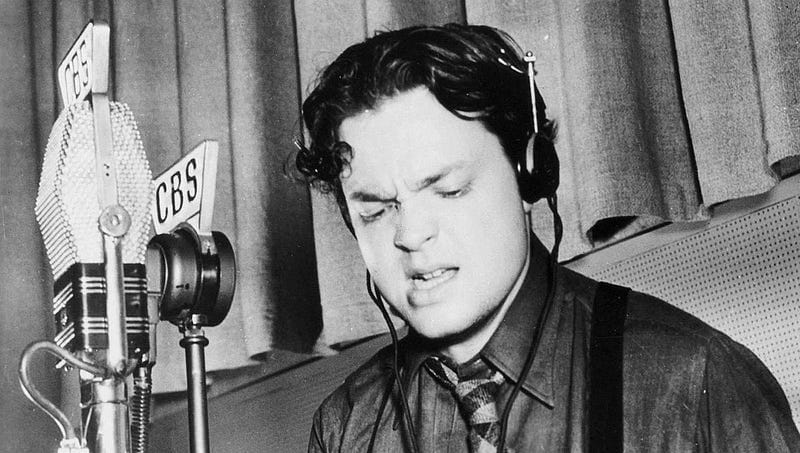
22-year-old Orson Welles must have thought his director had gone mad.
Sitting in a 3-sided wooden box, looking past a microphone out of a window only slightly bigger than his head, Welles could see Director Irving Reis, several other actors around a microphone, and a large wooden shed resembling a train caboose. If he turned away from his microphone and looked behind him, another small window would reveal an unorthodox tiny orchestra and their conductor. What he was aware of but could not see was that, to his left, a group of about 200 students — New York University, New Jersey High School, Boy’s Club Members — were being given frantic last minute instructions by Assistant Director William Robson.
The kids were in the 55,000 square foot Drill Hall of New York City’s Seventh Regiment Armory and were being coached to become a “terrified mob” in a mythological metropolis of the future for a live radio broadcast of Pulitzer Prize-winning poet Archibald MacLeish’s free verse drama The Fall of the City (1937).
Nothing of this scale had ever been attempted in radio drama. Never had the elements of any dramatic radio broadcast ever been so chaotic that a show’s lead would need to be separated from the rest of the production by an isolation booth — prior to this radio dramas were recorded with all of the performers in the same small room huddled around a single microphone; two, if the show had a budget.
It was 1937 and Welles was in the largest venue he’d ever performed in. He had never been surrounded by this many actors and musicians — even his famed “Voodoo Macbeth” production the year previous only had 150 performers — but sitting quietly behind those unfamiliar walls built to isolate him from all of the other noise in the room, he must have felt very alone.
This night would launch Orson Welles into a seemingly unbroken series of artistic hurricanes in which he would, stubbornly and fiercely for many years, stand as the eye.
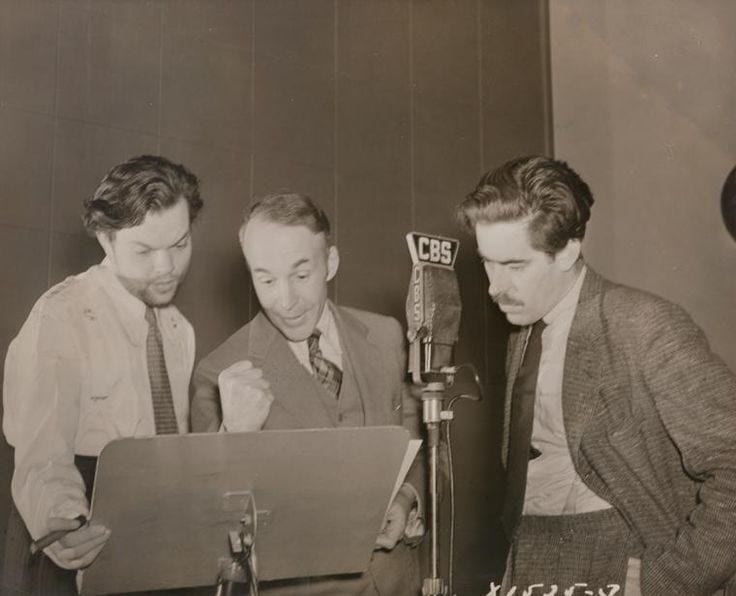
Archibald MacLeish had recently gone through a strange transformation.
A Harvard educated lawyer from a wealthy family, he had found his calling as a poet and devoted himself to writing full time by the mid-1920s. He wrote about culture and politics for Henry Luce’s Fortune magazine through the ’30s while pursuing poetry with a radical modernist style and conservative sensibilities — much in the T.S. Eliot mold.
Something began to shift in MacLeish, however, as The Great Depression wore on. He found his political compass veering away from conservatism and his first produced piece of drama, the verse play Panic (1935), was a direct attack on modern capitalism.
The play was a commercial failure, but after reluctantly accepting Director John Houseman’s puzzling suggestion to cast 19-year-old Orson Welles as the 60-year-old financier at the center of the play, he discovered that he had found both a friend and a champion in the young actor.
Welles, after performing scenes from Panic on the Columbia Radio series The March of Time, became a regular on that broadcast and, soon, the theatre wunderkind was finding a new, far more lucrative, source of income: radio.
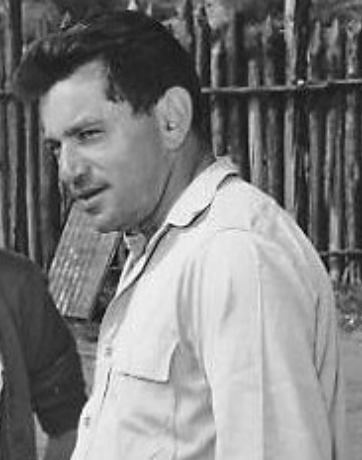
When Irving Reis decided to launch his medium-changing new radio program The Columbia Workshop, Welles was immediately pulled on-board as an actor and collaborator. Welles starred in the experimental anthology series’ first episode and continued to perform and adapt classical plays for several years.
MacLeish, in the meantime, had become further politicized by the Spanish Civil War as well as the rising tide of Nazi-ism in Germany. From those anti-Franco, anti-Hitler passions, he wrote his first play for radio: The Fall of the City.
Welles, with his prior relationship with MacLeish and his booming and intense baritone, was the obvious choice to star.
A harrowing, mythological, one-act, anti-isolationist poem, the story involves a contemporary-sounding radio news reporter covering the strange story of a Dead Woman who periodically emerges from her tomb. As a massive crowd gathered, she makes a prediction:
“The city of masterless men
will take a master.
There will be shouting then:
Blood after!” — Archibald MacLeish, The Fall of the City
The dramatic parable then shifts between arguing leaders making impassioned speeches to win over the tightly wound and frightened masses: one a pacifist, one a Priest, another a General. Tension mounts as the prophesied Master draws closer with the City unable to make a decision.
The play was a sensation. Its popularity transformed the careers of several participants and, in doing so, fed into an expansion of the possibilities of another art form: cinema.
The production was a tour-de-force. It redefined what radio could do. The Columbia Workshop would run weekly for the next seven years and continue sporadically for years after that.
Not only did the show strap rockets onto Orson Welles’ rising star, but it also changed the trajectory of a 29-year-old Broadway actor who had heard about the production, wandered over to the Armory, knocked on the door during a rehearsal, and asked for a part: Burgess Meredith shines as the pacifist Orator.
“Murder your foe and your foe will be murder!
Even your friends suspected of false speaking:
Hands on the door at night and the floor boards squeaking.
Those who win by the spear are the spear toters.
And what do they win? Spears! What else is there?
If their hands let go they have nothing to hold by.
They are no more free than a paralytic propped against a tree is.” — Archibald MacLeish, The Fall of the City
Meredith would continue his successful theatre career, but after the success of Fall, he became a fixture on radio as well. His broadcast resume grew, as did his subsequent film and television bona-fides. From his classic performances on Rod Serling’s Twilight Zone to his unforgettable Penguin on the 1966 Batman series to his Oscar nominated performance as Rocky’s trainer Mickey in the titular film, Meredith became iconic in the cultural landscapes of multiple generations.
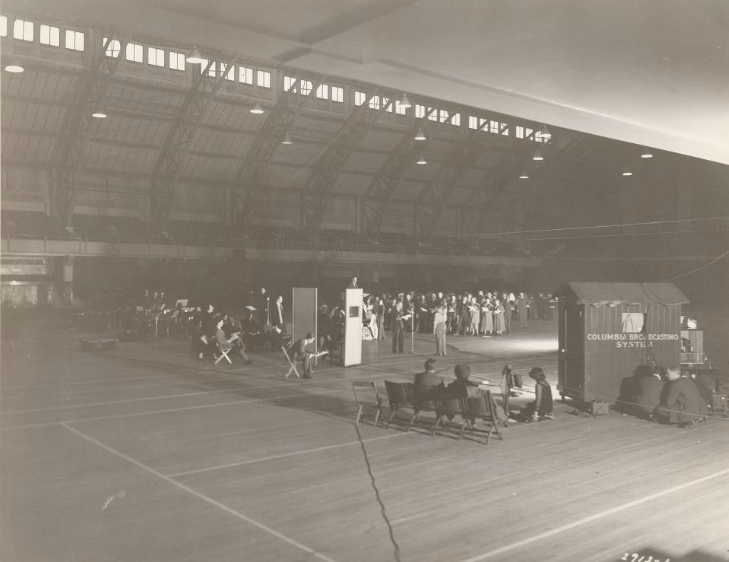
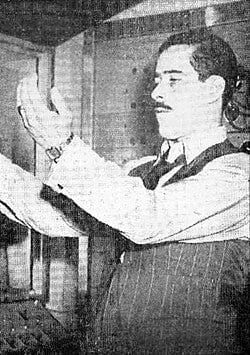
Bernard Herrmann, the Workshop’s resident composer, pushed his musical anti-music in the production by building an ensemble to play primitive sounding fragments of composition. Using only percussion and wooden wind instruments, the music holds a place that is both diegetic and ironic as it creeps through the unintelligible crowd noise.
The boldness of his experiments and the fierce authority he demanded over his work revealed him as a kindred spirit to Welles and from here they forged forward as a team.
“People always tell me how difficult Orson Welles is. The only people I’ve ever met worth working for were difficult people — because they’re interested in achieving something. Just spare me the charmers. Welles in every other way might be difficult, but when it comes to making artistic decisions he’s like the Rock of Gibraltar.” — Bernard Herrmann, Interviewed at The George Eastman House, Rochester, NY 1973
Herrmann would become one of the most celebrated composers in the history of cinema. With Welles they continued to work together on the Columbia Workshop and later the Mercury Theatre on the Air. He transitioned with Welles to film and scored both Citizen Kane (1941) and The Magnificent Ambersons (1942).
Later Herrmann had a decade-long relationship with Alfred Hitchcock, composing the scores of seven of the master’s films. His sharp, percussive, iconoclastic style that had formed during those early years with the Workshop became as recognizable a part of films like Psycho (1960) as Hitchcock’s own.
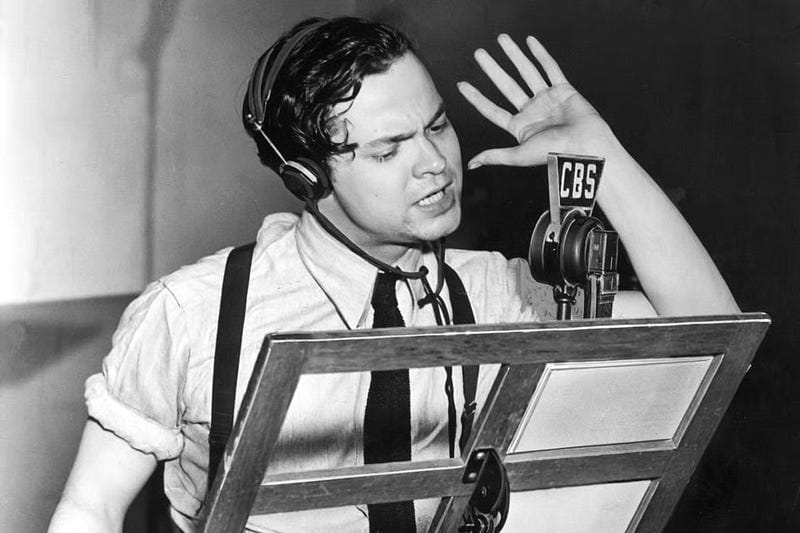
The Fall of the City turned Orson Welles from a cult figure into a star.
He continued to adapt and perform pieces with the Columbia Workshop, and soon formed his own, similar, Mercury Theatre on the Air. Bernard Herrmann came with Welles from the Columbia program and even Burgess Meredith appeared occasionally.
Looking to do something special for the show’s first Halloween, Welles picked a famous science fiction novel from H.G. Wells and, in order to give it immediacy, replicated MacLeish’s Fall of the City framework. He wrapped a fantastical story in a fake modern day newscast and let his narrator — actor Frank Readick’s reporter, Carl Phillips — pull the audience through the science fiction with a newsman’s reportage.
MacLeish’s play had chilled its listeners, Welles’ scared the bejesus out of them. Where Fall had dramatized a terrified mob, Welles inadvertently turned the American public into one.
Welles wielded MacLeish’s realistic news framework so believably that an extraordinary number of Americans believed it. And while the Mercury Theatre staff were publicly apologetic that they’d convinced people that the Earth had been invaded by Martians, it would have been hard not to notice the notoriety that their Halloween prank had given them.
War of the Worlds (1938) may be the single most famous radio broadcast of all time.
Welles was now a superstar and Hollywood wanted him, desperately.
“I got that good a contract because I didn’t really want to make a film. And you know when you don’t really want to go out to Hollywood, at least this is true in the old days, the golden days of Hollywood — when you honestly didn’t want to go — then the deals got better and better. In my case I didn’t want money, I wanted authority, so I asked the impossible, hoping to be left alone, and at the end of the year’s negotiations, I got it.” — Orson Welles interviewed by Huw Wheldon, 1960
He was about to use that cache to make a masterpiece. Like Archibald MacLeish’s play Panic — the play that put the poet and Orson Welles together — Citizen Kane (1941) tells the story of the fall of the world’s richest man. Welles again frames his story via news reports, this time as newsreels.
It is hard to avoid the parallels between the two plays by MacLeish that Welles performed in and Welles’ own first films: Citizen Kane and The Magnificent Ambersons. The fall of aristocrats, modern methods — reporters, newsreels, town gossip, electric news bulletin — that effect a Greek chorus, dissolution at the end of an era; these are all recurring themes from both men.
If Orson Welles altered the trajectory of cinema, The Fall of the City gave him the clout, and many of the methods, with which he did it.
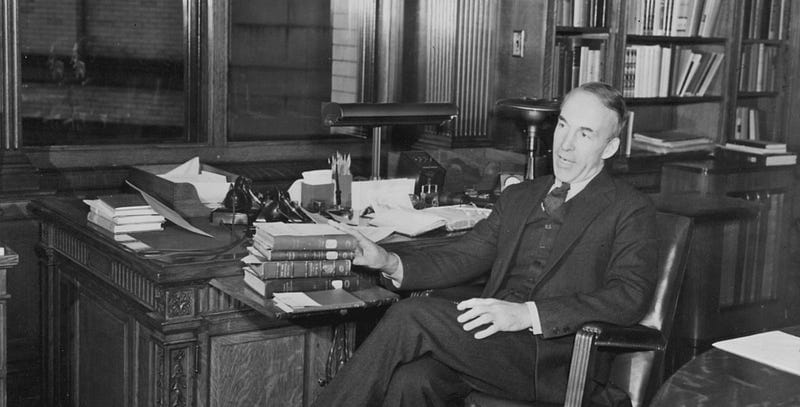
And as for Archibald MacLeish? By 1939 Franklin Delano Roosevelt made him the Librarian of Congress, a role which he used to revolutionize the institution. Later he becomes Assistant Secretary of State and in 1959 won his third Pulitzer Prize for the play J.B..
So next time someone tells you that poetry is worthless, tell them about how a single poem changed, well, everything.
Recordings of both the original broadcast of The Fall of the City and the 1937 rebroadcast recorded live from the Los Angeles Coliseum are available to stream at the Old Time Radio Researchers site.