Disney 100 — A Tale of Five Disneys
What is the Disney Company and who has it been for the last 100 years?

It’s the 100th anniversary of the Disney Company!
This is certainly an anniversary worth celebrating, but when we talk about 100 years of this company, what do we actually mean? Through the lifetime of the organizations that are in some way labeled “Disney” a lot of names float by: Walt Disney Productions, The Disney Brothers Cartoon Studio, W.E.D. (Walter Elias Disney), The Walt Disney Company, Walt Disney Animation Studios, and on and on. What really constitutes the identity of this cultural giant that we call Disney?
I’d like to make the case that when we’re discussing the Disney Company, we are talking about five distinct organizations — many a gestalt entities made up of legally separate ones — linked together through a sort of generational lineage. As we walk down the connecting paths that lead from one Disney organization to the next, we can see how the path was cleared for the transition, but if we try to find some DNA in today’s Disney that is in common with the company that was founded in 1923, we may strain to see it as the same entity rather than the results a legal relay race.

1927–1941: Walt Disney and the Peak of Animation
The first version of the Disney company was formed on October 16th, 1923 as Walt and Roy Disney signed a contract with film distributor Margaret Winkler for a series of shorts that featured young Virginia Davis as a live-action character called “Alice” in a series of cartoon settings known as “The Alice Comedies.”
I don’t want to pretend to write a biography of the brothers or a history of the studio here, but rather to consider the nature of what made this period different from what followed. It’s a phase that goes from Disney’s start with Alice in 1923 and then through the creation of Mickey Mouse in 1927 to the Silly Symphonies and then reaching a crescendo with the studio’s crowning achievements: Snow White and the Seven Dwarfs (1937), Pinocchio (1940), Fantasia (1940) and Bambi (1942 — though earliest production for the film predates Pinocchio).

With this body of work animation as an art form hit its peak. This is not to say that brilliant work has not happened after, and you certainly could argue that what is called animation today is actually a DIFFERENT art altogether, but animation in the classic sense hit its highest mark in those years.
Walt Disney was many men in his short life, and the studio and his identity were so linked in those early years that we have to ask, who was he during this first phase? This was Walt at his most energetic, his most daring. He was not the folksy older uncle that we are so familiar with now through his decades of television — in fact, when we see footage of this very early Walt, he seems strange and edgy to us now. In the 30s he was Pop Art Walt. Fashionable Walt. Hip Walt. Roy may have struggled to keep his brother’s feet anchored to the ground, but his failures to do so may have resulted in the company’s most glorious accomplishments.
At the end of this period, however, Walt was going to fundamentally change and the output of his animation studio would never be as great again. Pinocchio, Fantasia, and Bambi all flopped financially. The studio went from its most successful to almost broke again in under five years. The war ate up its overseas profits and the audiences’ appetites evidently weren’t as bold as those of Walt Disney, the great Depression-era artist.
And then his staff went on strike, and the Walt that emerged from that conflict was a very different man.

1942–1966: Uncle Walt — Futurist
After Walt Disney returned from South America in late 1941, having been sent there in part as a sort of faux cultural ambassador and, in part, to get him away from his labor troubles so that the United States Government could step in and fix things, he dedicated himself with enthusiasm to supporting the war effort, and with less enthusiasm to restoring the stature of his animation company.
Due to reduced budgets, Walt found himself leaning into cost-cutting measures such as features made up of compilations of shorts, and live-action movies (helpful in avoiding the costly and time-consuming animation process). While the contents of some of these films are often quite brilliant, and a small renaissance was going to happen post-war with Cinderella (1950), Alice in Wonderland (1951), and Peter Pan (1953), the studio was never going to see the likes of a Pinocchio again. Walt’s team was going to, in a large way, carry a lot more of the work for their boss while he searched around for something new to be interested in. Walt was still deeply involved in these films, but he also seemed far more willing to step away from the day-to-day process than he ever would have in the 30s.
This version of the Disney Company would be the last in which it was guided by the, often peculiar but always bold, vision of its founder and Walt emerged from the 40s as a strange combination of folksy moralist — gravitating away from the sort of adventurous radicalism that was once his artistic motif-operandi and that he now associated with the labor troubles that had so discouraged him — and futurist.
Again, we don’t want to try and write a comprehensive history here, but we want to characterize the company in this period which was quietly having its talent siphoned from its bread-and-butter, movies, into Walt Disney’s newest obsession — the re-invention of the American amusement park.

A through-line exists from this point, from Walt’s decision to build a fun place for families like no other to the projects he was continuing to pursue towards the end of his, far too brief, life: projects such as his grandest vision, E.P.C.O.T.. Walt’s fascination wasn’t only tied to simple amusements — a lucrative industry in the suddenly prosperous post-WWII U.S. — but also to urban planning, modern machinery and robotics, space flight, new forms of energy, environmental design, and to the broad idea of improving lives through scientific progress.

Make no mistake, the Disney Company would not have even considered the steps he took towards Disneyland and, later, his futuristic City of Tomorrow in Florida without the brilliance, drive, and charm of this one man. And this charm, as part of the deal he had to make to get financing for these new ambitions, was suddenly on display on American televisions every week with the new, cross-promotional television series, Disneyland (later known as Disney’s Wonderful World of Color and The Wonderful World of Disney). America now had an Uncle Walt and he was making strange and interesting things happen.
This is where the company combined what it knew about art with what it was learning about infrastructure and began to build. Walt’s dreams became bigger than those which just about anyone else was dreaming. Some got fulfilled: Disneyland. Some did not survive him: E.P.C.O.T..

1966–1989: “the center cannot hold”
There are Chairmen and CEOs and Presidents of a company and these titles signify a level of authority, except during the early to mid-century at Disney where one name meant almost everything; and then he was suddenly gone. Next came a clamor, not for people rushing to grab power, but for people trying to understand who was supposed to be holding the ship together.
No one knew. Walt’s brother Roy was trying to retire, but he was the obvious, default choice. There was the stalwart Card Walker for a time. And sadly underappreciated son-in-law Ron Miller. Who was steering this thing?
What the company ended up with was a strange mish-mash of ideas from brilliant people which didn’t quite feel like a coherent part of an identity. Walt’s prospectus for a city of the future had built-in problems that were going to be difficult even for someone as persuasive as he had been to surmount. Perhaps bowing to the inevitable, the rest of the team almost immediately abandoned the idea and, instead, grabbed onto the theme park piece of the Florida Project and built on that.
It is interesting to note that in this period, which many see as one of chaos and confusion for the Walt Disney Company, was the point at which their most lucrative enterprise — arguably the centerpiece of the modern Disney company — Walt Disney World in Florida was conceived and built.
While Walt certainly had the Magic Kingdom theme park piece of “The Florida Project” in his plans, he didn’t care much about it passed it being the thing that his brother had told him he would need to fund E.P.C.O.T.. And E.P.C.O.T. itself ended up being nothing like what Walt had planned. Past the Disneyland influence on the Magic Kingdom, the modern era of films, theme parks, and television was very much the product of a rotating group of often inspired generals who may have been a little uncomfortable wearing their bars.

Roy Disney and Card Walker shepherded in the Florida parks. Wolfgang Reitherman helped keep animation, if not moving forward, steady. Ron Miller bolstered the live-action filmmaking divisions and helped found The Disney Channel. This is oversimplifying some of the remarkable work that was done and the complexity of the organization over these eighteen years, but that’s kind of the point. We got great films like Escape to Witch Mountain(1975) and Freaky Friday (1976) and Tron (1982). And we got magnificent theme parks and a New Fantasyland in Disneyland. And we got the early Tim Burton and Who Framed Roger Rabbit? (1988) and Welcome to Pooh Corner (1983), but what did it all add up to? Who was Disney now?
A seemingly successful piece of this period of creative spit-balling provides some poignant foreshadowing for what’s to come. For the first time ever, a Disney theme park built a major attraction based on another company’s intellectual property: Star Tours (1987). It all seemed so innocent at the time.

1989–1999: The Disney Decade
The modern mythology of the Disney Company was created during the 90s. While Michael Eisner and Frank Wells had been in place for a few years at this point — put there during a corporate raider panic and to replace the final member of the Disney family to serve as the company’s President, Ron Miller — and gotten some plates spinning, as far as the public could see 1989 was when Disney was suddenly back!
It is impossible to deny the triumphant success of Disney animation during this span — particularly during the first half. Films like The Little Mermaid (1989), Beauty and the Beast (1991), and The Lion King (1994) are as representative of the company’s identity as Snow White or Bambi are — for some generations even more so. Taking on a new formula of more of a Broadway-style musical comedy for the features proved to be a massive hit with audiences and remains the standard today. A new generation of “rockstar” animators such as Glen Keane and Andreas Deja had risen through the ranks to great fanfare and brilliant songwriters such as Alan Menkin, Howard Ashman, Elton John, and Stephen Schwartz were writing hit after hit for the films.

Disney was, yet again, a juggernaut in the movie theater and on TV as well where the Disney Afternoon line-up had somehow made after-school cartoons cool again while new variants of the Mickey Mouse Club were growing the next generation of music superstars — Brittney Spears, Justin Timberlake, Christina Aguilera — right before our eyes!
The theme parks seemed to be beginning a renaissance of their own, as well. Doubling down on the Lucasfilm partnership the even grander attraction, Indiana Jones and the Temple of the Forbidden Eye (1995), and an increased Star Wars presence had the effect of refreshing the parks experience for a new age. The Disney-MGM Studios theme park and Disney’s Animal Kingdom in Florida were built. Plans for a theme park in Hong Kong and a second gate in Anaheim entered the serious planning stages.
It was a period of tremendous redefinition and stunning success.
Oh, did I mention the new park in France?

2000 — Present: Disney as Parent Company
The end of Michael Eisner’s years as the head of the Disney Company are marked by deeply unfortunate cost-cutting due to the panic surrounding the opening and poor attendance during the early years of Disney’s second international park — the first one actually owned and operated by Disney. (Tokyo Disneyland is owned and operated by the Oriental Land Company and licenses Disney intellectual property.) While a number of those projects eventually became profitable (including the park soon to be renamed Disneyland Paris), the stumbles of diminishing box office for animated features as well as the unimpressive openings of Disney California Adventure, Disneyland’s disappointing “New Tomorrowland” and concerns about the future of the upcoming “half-day park” Hong Kong Disneyland all presaged a change and by “change” we mean that a new executive team was about to come in and take a few key elements introduced during the Disney Decade and blow them up exponentially.
The acquisition of ABC combined with the incorporation of newer, non-Disney, intellectual property into the company’s portfolio in the decade prior would become a model for a new identity for this company which had, back in the mid-20s, learned never to sell its IP to anybody. Disney would no longer be the land of Princesses and humble Bavarian puppet-makers, it would become the resting place of any piece of popular culture daring enough to make a lot of money. Luke Skywalker, Indiana Jones, Iron Man, Captain America, Woody, and Buzz Lightyear are all characters that have expanded and now inhabit the fantasy world of Walt Disney. Heck, Princess Leia Organa is now a Disney Princess. And the Xenomorph in Aliens (1986) has been an evil Disney queen since the 20th Century Fox Acquisition.

Disney has continued to make a lot of terrific films in-house and they have struck box office gold over and over again with films like Frozen (2013), Moana (2016), and an entire series based on the Pirates of the Caribbean theme park attraction. The company learned something else along the way as well, the lucrative joy of double-dipping.
Not content with the occasional cheaply made, usually for television, sequel that had begun to become the unfortunate norm during the Disney Decade, the studio added a new gimmick to its bag of tricks; they began remaking their movies as “live-action” films with tons and tons of state-of-the-art CGI. To date, the two highest-grossing animated films of all time are the CGI remake of The Lion King (2019) and Frozen 2 (2019). It is hard to deny that this sequel and remake strategy has been effective. (Adjusted for inflation, I should point out, the highest by some measure would still be the 1937 Disney feature, Snow White and the Seven Dwarfs.)

Along the way, some of the most massive theme park expansions that the company has ever attempted came alive; almost all of them based on acquired or licensed intellectual property. Galaxy’s Edge in both Disneyland and Walt Disney World is a breathtaking area based on the later Star Wars films. Pandora — The World of Avatar is the first major expansion to Disney’s Animal Kingdom since its opening and is a deep dive into the world of James Cameron’s multi-billion dollar film franchise. Avengers Campus is a Marvel Cinematic Universe–themed area located at Disney California Adventure and Walt Disney Studios Park in Disneyland Paris, and is being developed for Hong Kong Disneyland. Pixar Pier is the much-improved version of Disney California Adventure’s seaside boardwalk area based around the now Disney-owned Pixar animation company.
The company is, at this point, a pop culture megalith. Even with its pandemic and post-pandemic struggles, it seems to remain positioned as a cash-generating machine. Whether or not it’s still a mythology-generating machine, is difficult to tell. The talent is still there. It’s hard to deny the heart of the company is still in there beating with shorts like Once Upon a Studio (2023), features like Encanto (2021), and theme park attractions as delightful as Mickey and Minnie’s Runaway Railway (2020).
But would someone from the middle of the last century look at the output of this company today and say that it’s the same studio?
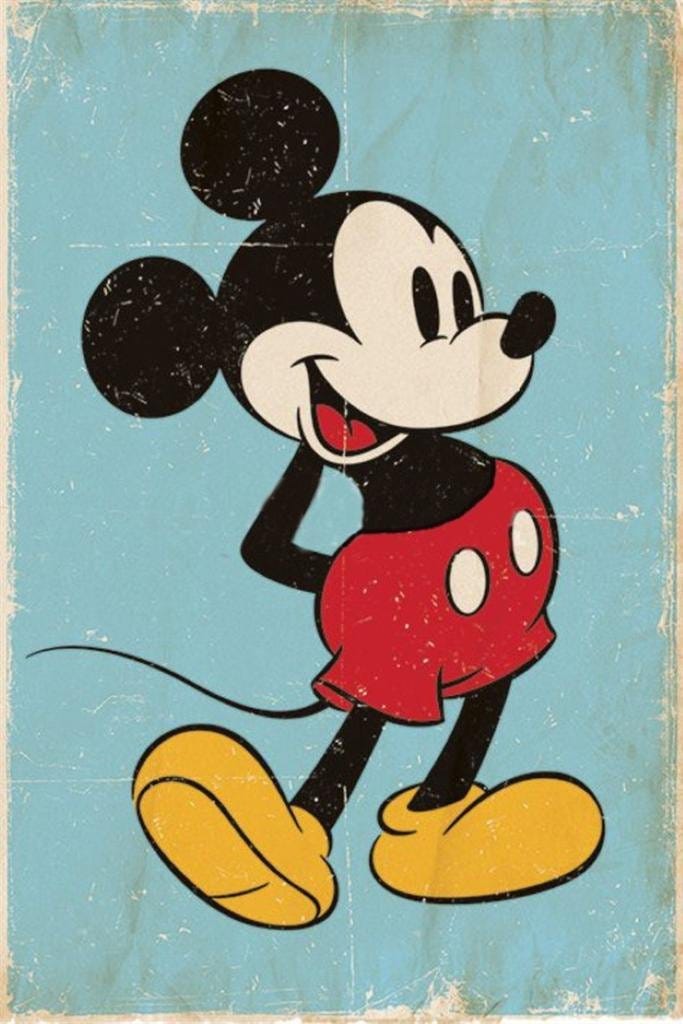
This guy might.
Be sure to follow Boardwalk Times for more coverage of The Walt Disney Company.
Support Boardwalk Times on Ko-Fi.
Support Boardwalk Times by visiting Boardwalk Store:

If you like this article. Subscribe to our free newsletter Boardwalk Times: Stories from the Seashore, a monthly dose of Disney and its businesses.

Kelly McCubbin is a columnist for Boardwalk Times