Alien: Earth and Disney’s Obsession with the Xenomorph
The Walt Disney Company has been chasing a monster for forty years. Was catching it worth the cost?
Note: This article contains very minor spoilers from the first episode of Alien: Earth.
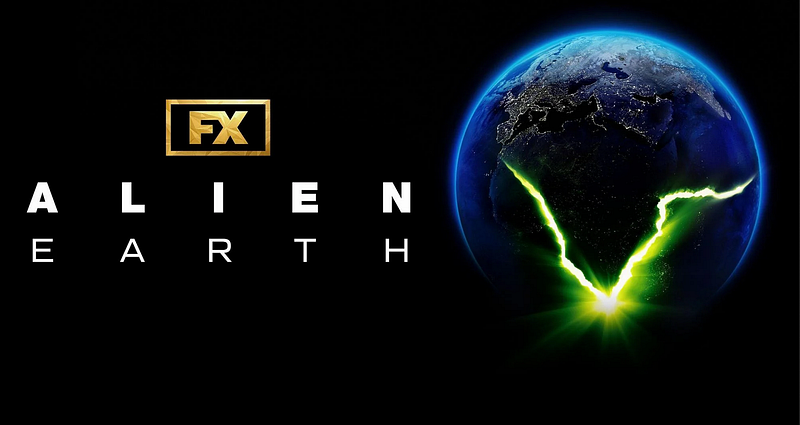
Let’s get this out of the way: Alien: Earth, Noah Hawley’s new television series, may be the best property in the Alien franchise since, well, Alien (1979). Giddily plumbing the Xenomorph’s ‘70s-horror roots, it manages to be both terrifying, brooding, angry, and introspective as it careens towards its finale.
Hawley has a proven track record as one of television’s finest revisionists, having turned both the Coen Brothers’ film Fargo (1996) and Marvel Comics’ Legion (an X-Men Spin-off) into deconstructions that both salute and re-examine their source material.
Alien: Earth, now streaming on FX and FX on Hulu, continues this trend, imagining a ship different than the first film’s Nostromo, The Maginot, to pose a “What If?” scenario: what if they’d gotten the Xenomorph home?
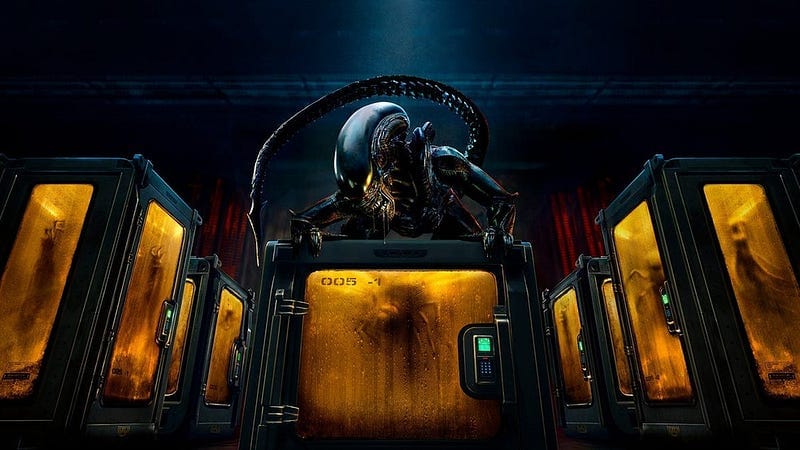
So how does Disney fit in? The relationship between the Walt Disney Company and this decidedly un-Disney property is a bizarre one. Disney has tried, since the 1980s, to bring the property under the same mythological umbrella that currently holds Star Wars, The Avengers, Buzz Lightyear, and Mickey Mouse. With Alien: Earth, they may have gotten what they wanted, but at what cost?
The Teen Element
The 1970s were a sour time for the relationship between teenagers and the Disney parks. The parks — Disneyland in California and The Magic Kingdom in Florida — were still profitable, but had become decidedly uncool. By the time that Frank Wells and Michael Eisner were brought in to lead the company in 1984, Disney’s movie business had become seriously unstable, and the company was being kept aloft by the profits from the theme parks. As the pair tried to reinvigorate Disney’s core business, movies, they needed to make sure that the parks were able to flow the ever-increasing amount of capital needed into the company; the obvious growth market to do that was teenagers. They needed them back in the theme parks.
Eisner, famously, checked in with his teen son Breck to see what a normal (albeit fabulously wealthy), red-blooded, American teenager would go for. Frankly, the answer would’ve been pretty clear if he had spent any time in a movie house over the prior seven years: Star Wars.
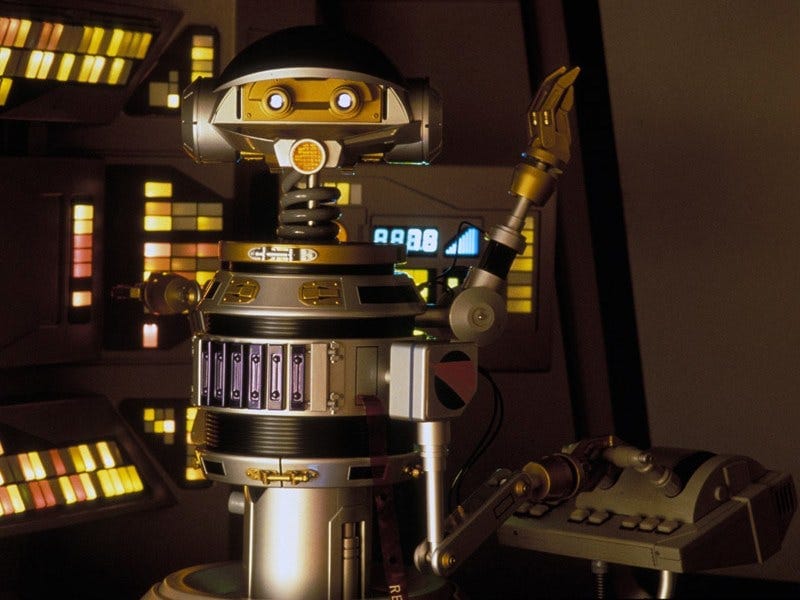
The first attraction in a Disney park not based on a Disney property was 1987’s Star Tours, and it was a massive hit. Eisner had struck gold and wanted to try again, but this time he wanted to push even harder and find something with real edge.
Nostromo
Nostromo would have been a ride inspired by the success of James Cameron’s Aliens (1986), the successful sequel to Dan O’Bannon, Ronald Shuseett, and Ridley Scott’s 1979 film. The story was that you were a space marine riding through the titular ship (which had been destroyed in the previous film, but who’s counting?), now infested with xenomorphs, and you were using the military-grade weapons attached to your transport to kill them and escape.
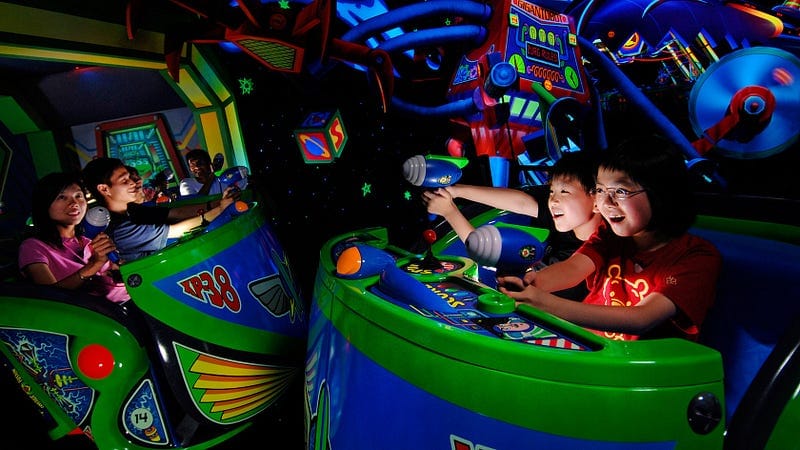
It was essentially to be an early version of Buzz Lightyear’s Space Ranger Spin (1998), but much MUCH more bloody.
An attraction based on an R-rated film was, however, going to be a shock to the system of Imagineering. Plenty of the Disney craftsmen still in the organization had worked with Walt himself, some of whom went all the way back to Disneyland in the mid-’50s. Even Disney’s own more adult distribution label, Touchstone, had only just put out its first R-rated movie, Down and Out in Beverly Hills (1986), and that was a light comedy. Merging buckets of gore into Disneyland’s optimistic Tomorrowland was, for a lot of these Imagineers, too far.
Treading lightly around the people running the company’s main profit center, Eisner backed down.
The Great Movie Ride
Disney had already procured the rights to Alien, however, and a few years later, in the context of a completely new park, Michael Eisner managed to find a way to get the monster into the theme parks.
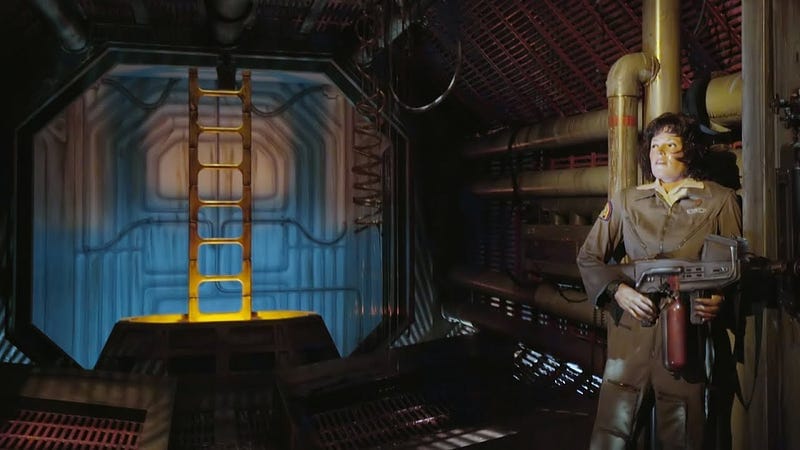
The centerpiece attraction of the newly christened Disney-MGM studios was an elaborate 22-minute tour through the history of movies called The Great Movie Ride (1989). Most of the major Hollywood studios were represented in the ride, and 20th Century Fox’s sole entry would be a trip through the Nostromo from the last act of Ridley Scott’s original Alien.
Sigourney Weaver’s Ripley appears in animatronic form, hiding with a flamethrower in hand while the ship’s computer, Mother, counts down a self-destruct sequence. The audience’s massive ride vehicle is attacked not once, but twice by the Xenomorph before the car exits the scene. The experience was only about a minute long, but the Imagineers saw the impact it had on guests, and now some of them were ready to go further.
ExtraTERRORestrial Alien Encounter
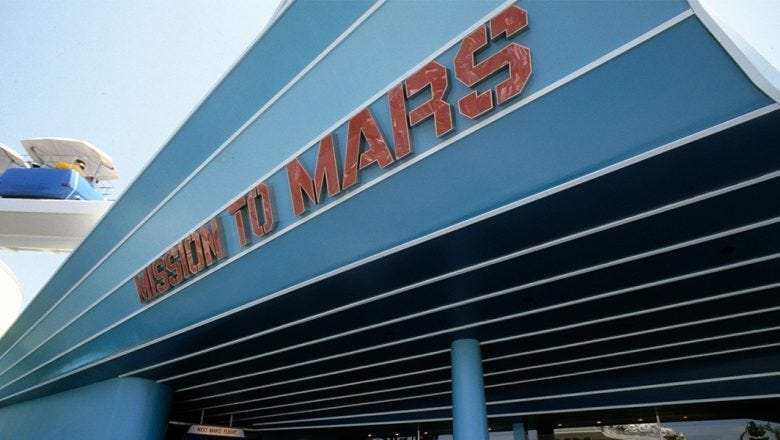
The Magic Kingdom’s Tomorrowland in Florida was becoming badly dated by the ’90s. The opening day attraction, Flight to the Moon — later re-skinned as Mission to Mars — was an idea that had run its course. If upgrades were going to be done to Walt Disney World’s land of tomorrow, this was the obvious place to start.
With a circular chamber filled with seats, it was going to have to be something less kinetic than most thrill rides if they wanted to avoid gutting the structure entirely.
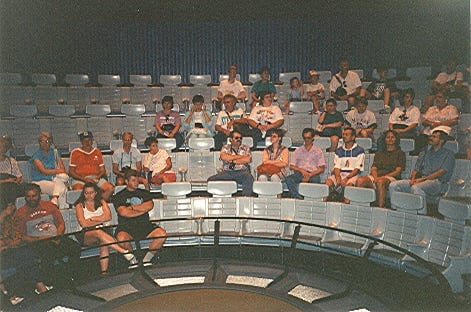
Imagineers saw another opportunity to bring the boss’ dream of an Alien attraction into the parks. They would strap the audience in those chairs, using the theater’s inability to move to their advantage, and trap them in a room with the Xenomorph. Using binaural sound, animatronics, special effects fitted seats, and lighting, it would be the most terrifying theme park ride ever.
Where some of the current roster of Imagineers were gung-ho about the idea, the old guard protested yet again, and this time they had an ally that Eisner had no choice but to listen to: George Lucas.
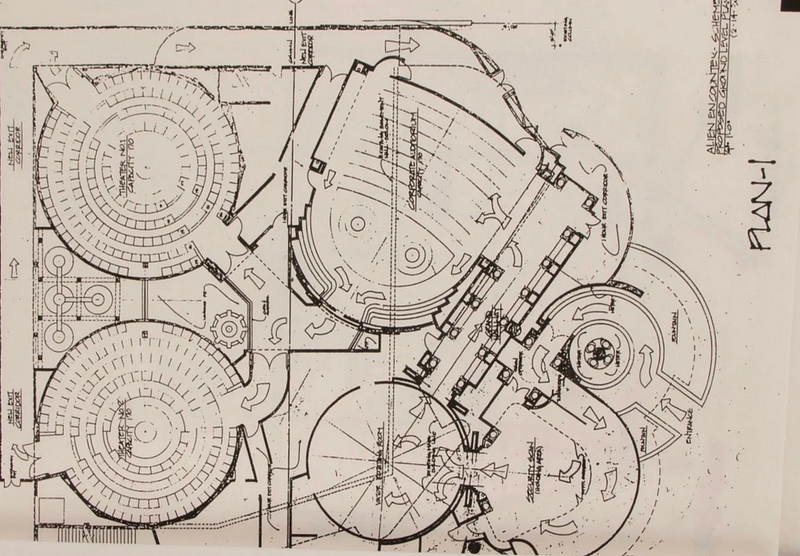
Lucas liked the idea of the attraction; he even worked on some of the early narrative, but he thought that the Alien franchise was just too intense to bring into a Disney park.
The Xenomorph was removed, sorta, and the attraction got built with a similar, but not exactly the same, monster and a slightly more comic narrative framework. ExtraTERRORestrial Alien Encounter (1995) became one of the most controversial Disney attractions of all time. Eventually, bowing to guest complaints about the attraction’s intensity, the ride was re-themed to a lighter, and even more critically savaged, Stitch experience.
The Path to Alien: Earth
Two months after the Xenomorph terrorized her last guest in The Great Movie Ride — the attraction having closed in 2017 after a 28-year run — Disney CEO Bob Iger made an announcement that startled the industry: the company was going to buy Twenty-First Century Fox, Inc.. Along with quite a raft of properties, this acquisition was going to give The Mouse control over 20th Century Fox Film Studios’ extensive catalog, which included — you guessed it — the Alien franchise.
If the Xenomorph in Aliens is a Queen, does that make the Facehuggers Disney Princesses?
Assuming that the desire to somehow mesh Disney’s family-friendly tapestry of stories with a series of violent monster movies had been an odd whim of Michael Eisner (and he’d had a few, look up where Splash Mountain got its name), it seemed likely that the Aliens would remain in their lane. This was supported by the lack of forward movement for the franchise for a number of years, and when Alien: Romulus arrived in 2024, it was kept far away from Mickey’s house.
The assumption that Disney had shed itself of its Alien addiction, however, was dead wrong, and Noah Hawley was about to usher in a new, disturbing, hybrid.
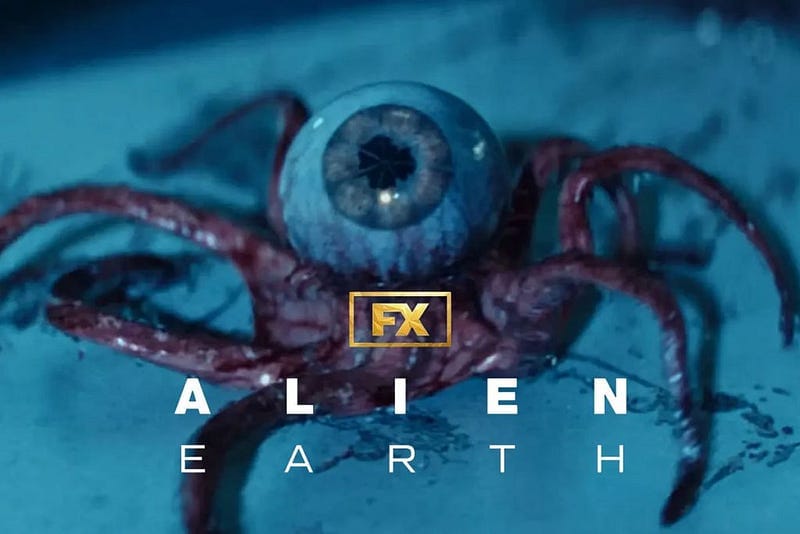
Production on Alien: Earth for the FX television network had begun in 2019, just around when the Disney/Fox deal had been completed. Intending to go into production the following year, the series was put on hold due to the COVID epidemic, and shooting began in 2023 for a 2025 release.
Again, a merging of sorts between Disney and the Xenomorph was happening, but this time, Alien wasn’t going to Disney; Disney was going to Alien.
Fans may have been startled to see, early in the first episode, footage from Disney’s classic 1953 film Peter Pan being used in a shocking way. Normally fiercely protective of their animation properties, Disney allowed their film, in Hawley’s fictional world, to serve as a way to soothe terminally ill children in the process of being euthanized.
Let that sink in.
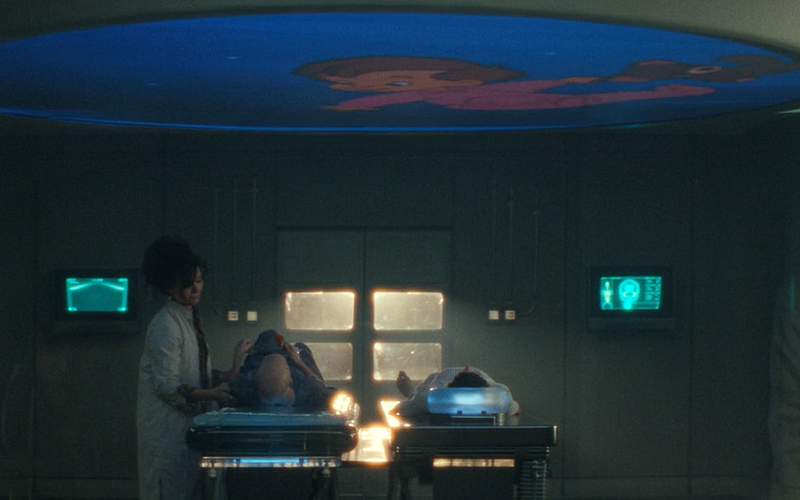
Not only is the film the last thing the children see, but their memories are then captured at the moment of death and placed in synthetic bodies, and the Peter Pan mythos — the last thing the children remembered — becomes fundamental to their weaponization as a new, unstoppable, never aging squad of “Lost Boys.”
It is deeply effective and Peter Pan as a thematic motif is brilliantly woven around the narrative… and the cynicism of the move, particularly on the part of the Disney Company, feels like an abdication. What once was a trust that these characters lived in a place of nostalgia and innocence — a fragile illusion of safety, admittedly — has been discarded. It is not that we are so naive that we don’t see the economics fueling this company’s machinery — Bob Iger opened Disneyland’s 70th Anniversary Celebration on Wall Street instead of California, after all — or that we aren’t aware that these films have issues that we had overlooked when we were younger. We know they aren’t perfect (except for Pinocchio (1940)), but we had always been able to count on Disney holding space for our feelings of warmth and awe, our childhood experience of the movies.
Those days seem to be gone. Maybe it was inevitable, but it feels like a shock.
And shock is a major ingredient in the re-framing that Hawley is doing so brilliantly with his Alien world. Two more episodes remain in this season of Alien: Earth. It’s a truly great show, but there has been a price.
For reasons that it is often hard to explain, Disney has been chasing the Xenomorph for over four decades. Sometimes catching your white whale is more destructive than your yearning for it, but it makes a great story.
Enjoy this story? Check out our podcast!

And all things Kelly, https://bio.site/kelly.mccubbin
Be sure to follow Boardwalk Times for more coverage of The Walt Disney Company.
Support Boardwalk Times on Ko-Fi.
Support Boardwalk Times by visiting Boardwalk Store:

If you like this article. Subscribe to our free newsletter Boardwalk Times: Stories from the Seashore, a monthly dose of Disney and its businesses.

Kelly McCubbin is a columnist for Boardwalk Times